In The Round: Using the Pep Ventosa Technique in Woodland Photography
Introduction
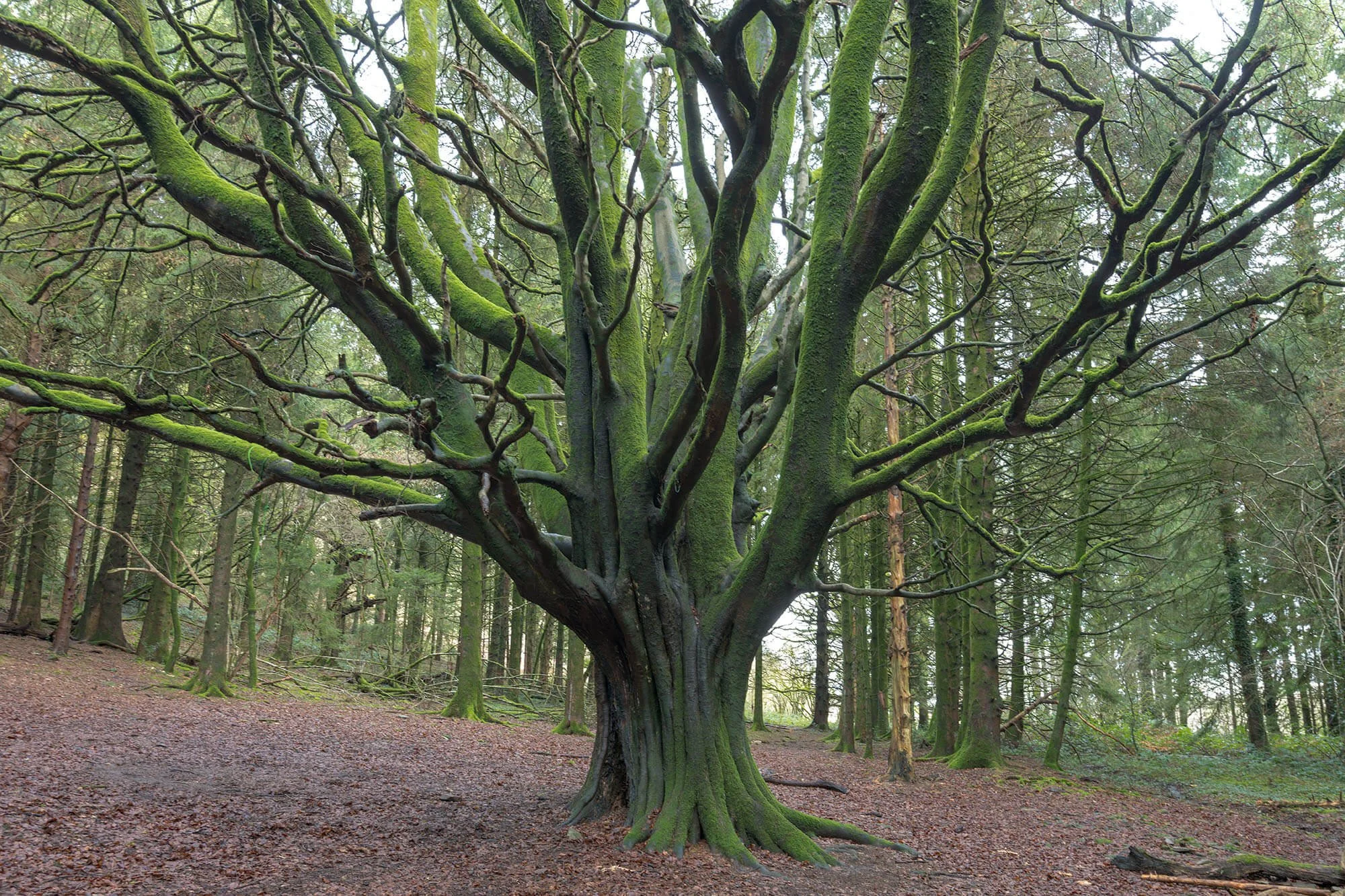
There’s a tree in my local woodland that I’ve returned to more times than I can count.
Different seasons. Different light. Different intentions. And every time, I walked away slightly frustrated.
Not because it lacked character. Not because the light wasn’t interesting. But because woodland photography is chaotic by nature. Branches intersect. Backgrounds compete. Depth compresses into visual noise. Even strong subjects can feel lost.
For years I tried to simplify scenes like this — changing angles, widening apertures, waiting for mist. Sometimes it worked. Often it didn’t.
So instead of trying to remove the chaos… I decided to use it.
Why Woodland Photography Feels So Chaotic
Unlike coastal landscapes or mountain scenes, woodlands rarely offer obvious structure. There is no horizon line to anchor the composition. No single dominant shape. Instead, you’re negotiating layers — trunks, branches, undergrowth — all competing for attention.
The challenge isn’t technical. It’s structural. That’s why many woodland images can feel cluttered or flat, even in good light. The 'In The Round' technique offers a creative solution.
What Is the 'In The Round' Technique?
The technique involves walking around your subject in a slow arc while capturing multiple frames from slightly different perspectives. Rather than documenting the tree from one position, you explore it — allowing subtle shifts in angle to build into a layered interpretation.
In the field, keep it simple:
- Manual exposure for consistency
- Fixed focal length
- Consistent white balance
- Subject roughly centred in each frame
- 20–40 images captured as you move around the arc
Each frame becomes a visual brushstroke. The transformation happens later during blending.
Blending the Images in Photoshop
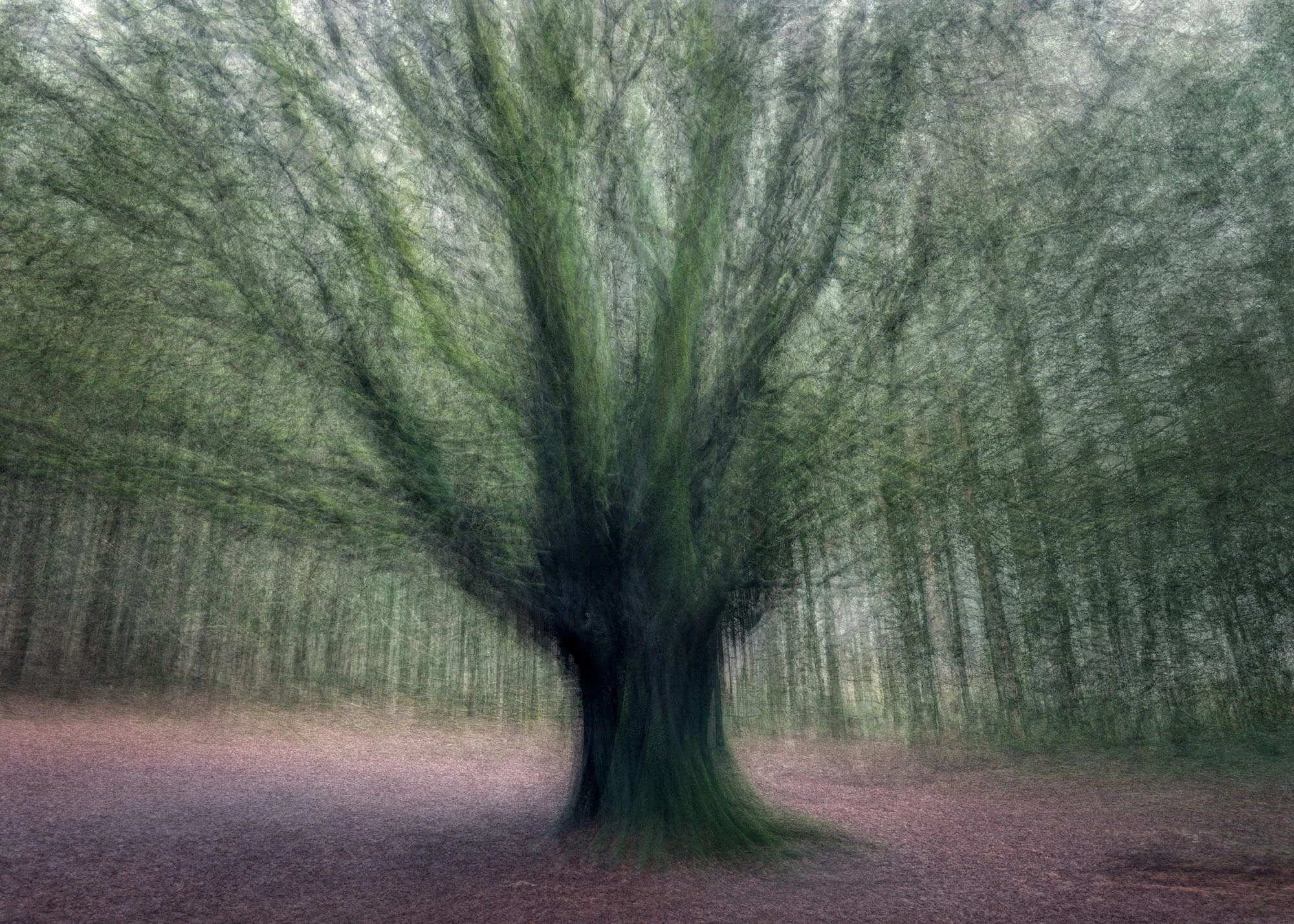
Back in Photoshop, I loaded all frames as layers and used Auto-Align as a starting point. From there, I gradually reduced opacity across the stack to allow the images to merge naturally.
Selective masking helped refine key areas, strengthening the trunk while allowing background layers to soften into texture.
The result is not a literal document of the tree, but an impression — something closer to how the woodland felt.
Why This Technique Works So Well in Woodland Photography
Woodlands are inherently layered environments. This technique amplifies that layering instead of fighting it.
Overlapping branches become texture. Subtle perspective shifts introduce motion. Hard edges soften into painterly forms.
The final image feels expressive rather than purely documentary — a balance between reality and interpretation.
A Shift Towards More Expressive Woodland Work
This image isn’t a one-off experiment. It forms part of a growing body of work within my 'In The Round' portfolio.
The process involves compositing multiple frames, and I’m transparent about that. For me, photography doesn’t have to be confined to a single exposure. It can be interpretive, layered and intentional.
This approach has opened up new creative possibilities — not just in woodland photography, but in coastal and architectural subjects as well.
Watch the Full Capture & Editing Process
If you’d like to see the full workflow — from photographing the tree to blending the images step-by-step in Photoshop — you can watch the complete YouTube video accompanying this article.
I’d love to know your thoughts. Would you try this technique in your local woodland?